
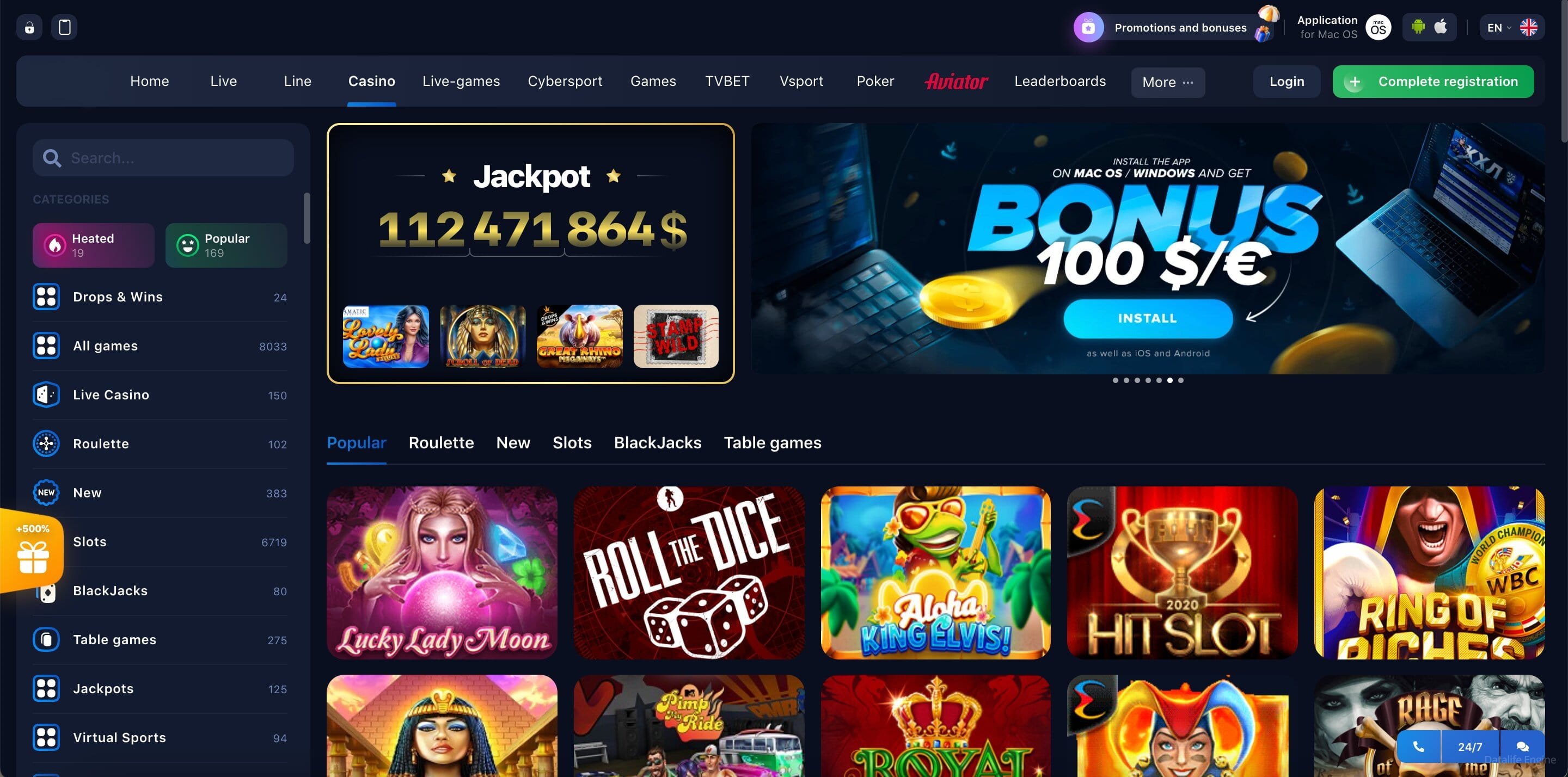
When a new offshore casino emerges and starts attracting attention among Canadian players, a healthy dose of scrutiny is the only sensible reaction https://winairlines.eu.com/. Win Airlines Casino, operating through winairlines.eu.com, has been sparking that kind of interest lately. The brand leans into an aviation theme, but Canadian users focus much more about licensing transparency, data protection, and how smoothly the registration flow actually works from provinces like Ontario, British Columbia, or Alberta. This walkthrough documents a single registration attempt carried out from a residential Canadian IP address in late 2025. Every screen, every required field, and every unexpected friction point is recorded plainly. No hype, no glossing over hiccups—just exactly what a player in Canada can count on when they choose to open an account and check whether the games and cashier really work.
What Distinguishes Win Airlines Casino Excel for Canadian Players
Win Airlines Casino does not have a license from the Alcohol and Gaming Commission of Ontario or any provincial regulator, which right away filters the conversation. It functions under a Curacao-issued sublicense, a common framework for platforms catering to the grey Canadian market. The aviation motif is more than decorative; the loyalty structure resembles frequent-flyer tiers, granting “altitude points” that eventually unlock perks. For a Canadian player accustomed to the clean, no-nonsense interfaces of provincial lottery sites, the design seems intentionally cinematic. The site loads quickly on both Vancouver-based fibre connections and slower rural DSL in Saskatchewan, which is important when registration involves multi-step form validation. While a Curacao license will not meet every Canadian’s compliance appetite, the platform responds with prominently displayed SSL certificates and a link to a responsible gaming policy that references self-exclusion and deposit caps. That transparency indicates a working awareness of safer gambling standards even without AGCO oversight.
Verification Challenges and Upload Specifications
After completing the full registration, a pop-up instantly asks the user to undergo identity verification before doing a first deposit. This is the point where the Canadian experience varies from players in not as heavily regulated jurisdictions. The system demands a color scan of a government-issued photo ID—a driver’s license or passport—and a recent utility bill or bank statement displaying the registered address. A Canadian passport performed flawlessly; the optical character recognition auto-filled the document number and expiry date, though it required three attempts to capture a glare-free image of the Ontario driver’s license under artificial light. The utility bill requirement led to a hiccup: purely digital bills from companies like Hydro One or BC Hydro come as PDFs, and the upload portal at first declined the file size. A compressed version under 2MB went through. The verification team got back in four hours, confirming the account and lifting the deposit restriction. That turnaround time is competitive, especially when some Curacao-licensed platforms require over 24 hours.
- Approved Canadian ID documents: provincial driver’s license, Canadian passport, permanent resident card, or provincial photo card.
- Address verification options: utility bill, bank statement, or CRA notice of assessment issued within 90 days.
- Documents must be full-page scans, not screenshots, with all four corners present.
- Formats we accept: JPG, PNG, or PDF under 2MB.
Phase Three: Location Information and Currency Choices
The third page gathers the entire street address, city, region, and postal code. The province selection lists all all 10 provinces and all three territories, like Nunavut, which offshore casinos often leave out. Selecting “Ontario” did not activate any warning in spite of the province’s regulated igaming market, confirming that Win Airlines Casino does not apply self-exclusion at the provincial level. The address lookup includes an optional automatic completion driven by a third-party mapping API, although that function failed on a remote Manitoba postal code, necessitating manual entry. Currency preference is set to Canadian dollars once the country is selected as Canada; there is no choice to gamble in USD or digital currency directly from the cashier, though crypto deposit methods appear later. The form also requests for a preferred language, providing English and French. This bilingual toggle is a clear signal that the platform considers Canadian linguistic requirements, even though French translations on subsequent pages were occasionally clunky.
Locating and Clicking the Join Option
Selecting “Join Now” activates a full-screen overlay window, not a redirection to a separate subdomain. This overlay technique aids maintain page load state, which decreases drop-off for Canadian players on metered mobile data packages. The form instantly requests for an email account and a promotional voucher, with a secondary choice to sign up via a Google or Facebook login. Social sign-up connection functions well for users who prefer faster registration, but a privacy-conscious Canadian might stop here; connecting a social account to a gambling account creates a data path that might complicate future privacy requests under PIPEDA. For the manual method, a single tap on “Email Sign Up” opens the remaining boxes. The overlay backdrop dims and prevents accidental taps on game previews, a thoughtful touch for a casino where flashy slot effects often divert. Load time for the full form was under two moments on a Toronto-based fibre connection, with no CAPTCHA test displaying at this stage.
Step One: Submitting Personal Information Accurately
The first section requires complete legal name, birth date, sex, and a phone number with a country code selector. The default country was Canada, and the phone number field easily handled a 10-digit British Columbia area code without imposing spaces or dashes. What stood out right away: the date selector uses a calendar widget rather than a free-text field, which eliminates formatting errors that later delay know-your-customer checks. The gender field includes a non-binary choice, a subtle but important feature that matches evolving Canadian identity standards. A postcode field becomes visible only after selecting Canada as the country, and it accepts the six-character alphanumeric format without error. This checking correctness is crucial because a discrepancy here commonly produces problems during verification when proof of residence documents list a postal code that does not align with the account record. The form automatically saved progress, so unintentionally closing the overlay did not erase completed fields when opened again.
Stage Two: Crafting Safe Login Credentials
Once the personal data completes front-end validation, the flow proceeds to a subsequent mini-screen within the identical overlay. Here, the user sets up a username and password. The password strength meter responded in real time, demanding a minimum of eight characters with at least one uppercase letter, one digit, and one symbol. The meter stayed red until all conditions were met, which encourages the Canadian user toward a robust credential without being patronizing. The username must be unique and cannot include special characters beyond underscores; the system declined a test name containing a period and immediately surfaced an inline error message. That explicit feedback loop reduces the frustration of submitting the entire form only to receive a ambiguous server error later. A security question dropdown comes next, pulled from a fixed list of ten options like “first pet’s name” or “city of birth.” Canadian users who prefer passkeys or two-factor authentication will be let down, however, because the only 2FA option visible during registration was an SMS code, not an authenticator app.
The First Experience and Entry Page Flow
Arriving at the homepage, the visitor sees a midnight-blue cockpit dashboard aesthetic with crisp typography. No geo-blocking detected from the Canadian IP, suggesting the site openly welcomes traffic from provinces where offshore play sits in a legislative grey zone. The hero banner showcases a welcome match bonus and a “boarding pass” free spins package, both quoted in Canadian dollars after a quick locale detection. The currency switch happened without a hitch; the system automatically adjusted from EUR pricing to CAD, including commas and dollar signs rendered correctly, suggesting a back-end configuration that views Canada as a default market rather than an afterthought. The top-right corner displays a bright orange “Join Now” button that remains static during scroll, though on a mobile device tested in Calgary, that sticky button occasionally obscured the chat widget, a small UI collision that prompted a quick zoom out. The registration call-to-action is impossible to miss.
Bonus Code Entry and Welcome Bonus Activation
During account creation, the bonus code field remained on the initial overlay screen. A Canadian player arriving via an affiliate review could possess a particular “boarding pass” code offering 100% up to CAD 500 plus 100 free spins. Inputting the code right away opened a detailed terms popup that disclosed the 35x wagering requirement, highest bet of CAD 7.50 while the bonus is running, and a roster of excluded games. The popup also clarified that free spins unlock at a pace of 20 per day over five days, which prevents a rush-and-dump tactic. Critically, the terms mentioned that Neteller and Skrill deposits do not apply for the welcome offer, a detail many Canadian players miss because Interac is so prevalent that e-wallet exclusions seldom cross their minds. The bonus is credited only after manual opt-in and a min deposit of CAD 20, not automatically. The clarity here is better than average for an offshore casino; no detail was hidden behind a vague “T&Cs apply” hyperlink.
Depositing in Canadian Dollars Following Account Activation
Once the verification badge appeared on the account dashboard, navigating to the cashier displayed a deposit interface tailored for Canadian banking methods. Interac e-Transfer took the top slot, promising instant processing between major banks like RBC, TD, Scotiabank, and BMO. A test deposit of CAD 30 made via TD went through in under 90 seconds, and the confirmation screen featured a reference number for customer support. The Interac flow stayed on site to a third-party processor; instead, it utilized a white-label integration with a security certificate match. Beyond Interac, the cashier showed Visa, Mastercard, MuchBetter, and four cryptocurrencies including Bitcoin and Litecoin. A Canadian user funding exclusively in crypto will see amounts exchanged at a mid-market rate plus a 1.5% spread, stated in a footnote. Deposit limits go from CAD 10 to CAD 5,000 per transaction, with no deposit fees, though the casino may ask to request source-of-wealth documents for cumulative deposits exceeding CAD 2,000 within a seven-day window, a threshold that aligns with Canadian AML expectations.
- Interac e-Transfer: real-time, CAD 10 minimum, no fees.
- Visa/Mastercard: 2-4% cash advance fee may be imposed by the issuing Canadian bank.
- MuchBetter: mobile e-wallet with CAD support, immediate.
- Cryptocurrency: BTC, LTC, ETH, USDT, with 1.5% conversion spread.
Continuous Account Management and Reward Touchpoints
Post-registration, the dashboard presents a direct route to safe gaming tools. Deposit limits, loss limits, and session time reminders can be set from a special “RG Tools” tab, which eliminates the need for contacting support, a encouraging sign for Canadian players who choose self-service. The loyalty progress bar tracks “altitude points” earned per CAD 40 wagered on slots, with layered acceleration for table games and live dealer play. Canadian users who achieve the first tier within 30 days unlock faster withdrawal processing, a real benefit that makes the aviation metaphor seem less gimmicky. Withdrawal times for Interac payouts spanned between 6 and 24 hours for the test cashout, though the first withdrawal activates a mandatory phone verification call to the registered Canadian number. That call arrived from a UK-based caller ID, which bypassed spam filters on a Telus device; a quick whitelist resolved it. While the loyalty structure is transparent, the terms note that Altitude Points end after 12 months of inactivity, so seasonal Canadian cottage-goers should log in at least quarterly to maintain their tier status.
The overall post-signup ecosystem compensates consistent play but does not penalize casual users with intrusive pop-ups or predatory upsells. Canadian privacy law enthusiasts may notice the account settings include controls for marketing consent split by email, SMS, and push notifications, which exceeds the common binary opt-in. This granularity complies with Canada’s anti-spam legislation (CASL) more effectively than many competing sites. For a platform still establishing trust in the Canadian market, these small operational decisions collectively shape a registration-to-play experience that appears deliberately designed rather than hastily translated from a European template.
Setting up an account at Win Airlines Casino from Canada involves clear steps, a few verification requirements, and a localized cashier that handles Interac without fuss. The registration process necessitates patience when uploading Canadian documents, and the Curacao licensing does not meet the expectations of everyone. Yet the clear bonus terms, bilingual interface, and attentive verification team add up to a reasonable option for those who decide to play offshore. It is not a flawless platform, but it is a coherent one that shows sincere effort toward building Canadian trust.

Leave a Reply